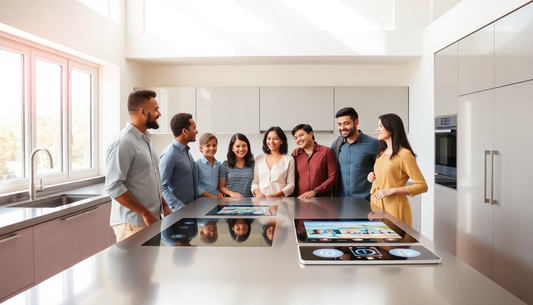

The Future of Cooking: Smart Kitchen Gadgets You Need
The kitchen has always been the heart of the home, a place where culinary creativity meets daily necessity. For centuries, cooking has remained largely unchanged in its fundamental approach—a chef, ingredients, heat, and time. However, we stand at the precipice of a technological revolution that promises to transform how we prepare, cook, and enjoy our meals. Smart kitchen gadgets are no longer a luxury reserved for tech enthusiasts or professional chefs; they are becoming essential tools that can save time, reduce waste, improve nutrition, and make cooking more enjoyable for everyone.
As we look toward 2026 and beyond, the integration of artificial intelligence, IoT connectivity, and advanced sensors into kitchen appliances is reshaping the culinary landscape. Whether you're a busy professional looking to streamline meal preparation, a health-conscious individual tracking nutritional intake, or a passionate home cook seeking to elevate your skills, smart kitchen gadgets offer solutions that were unimaginable just a decade ago. This comprehensive guide explores the most innovative and practical smart kitchen gadgets that are defining the future of cooking, helping you understand which technologies deserve a place in your kitchen.
Understanding the Smart Kitchen Revolution
The concept of a "smart kitchen" extends far beyond a single gadget or appliance. It represents an interconnected ecosystem where devices communicate with each other, learn from your preferences, and adapt to your lifestyle. This revolution is built on several foundational technologies that work together to create a seamless cooking experience.
The Technology Behind Smart Kitchens
At the core of the smart kitchen revolution lies the Internet of Things (IoT), a network of physical devices embedded with sensors, software, and connectivity capabilities. These devices collect data, communicate with each other, and can be controlled remotely through smartphones or voice commands. Artificial intelligence and machine learning algorithms process this data, enabling appliances to learn your cooking habits, predict your needs, and provide personalized recommendations.
Cloud computing plays a crucial role in this ecosystem, allowing devices to access vast databases of recipes, nutritional information, and cooking techniques. Meanwhile, advanced sensors measure temperature, humidity, weight, and other variables with unprecedented precision, ensuring consistent results every time you cook.
The convergence of these technologies creates a kitchen environment where cooking becomes more intuitive, efficient, and enjoyable. Appliances can communicate with each other—your smart oven can coordinate with your smart refrigerator to suggest recipes based on available ingredients, while your smart scale can send nutritional data directly to your health app.
Why Smart Kitchen Gadgets Matter Now
The timing of the smart kitchen revolution is significant. We live in an era of unprecedented time pressure, where many people struggle to balance work, family, and personal wellness. Simultaneously, there's a growing awareness of food waste, nutritional health, and the environmental impact of our dietary choices. Smart kitchen gadgets address these challenges head-on.
According to recent studies, the average household wastes approximately 30% of purchased food. Smart refrigerators with inventory tracking and expiration date monitoring can dramatically reduce this waste. Similarly, precision cooking devices ensure that meals are prepared optimally, reducing the need for trial and error that often results in wasted ingredients.
For health-conscious individuals, smart kitchen gadgets provide detailed nutritional analysis, portion control assistance, and personalized dietary recommendations. For busy professionals, they offer time-saving automation that doesn't compromise on quality. For passionate cooks, they provide tools that enhance creativity and precision.
Smart Refrigerators: The Command Center of Your Kitchen
The refrigerator is arguably the most important appliance in any kitchen, and smart refrigerators represent one of the most transformative innovations in kitchen technology. Modern smart refrigerators go far beyond keeping food cold; they serve as the central hub of your kitchen ecosystem.
Features That Define Modern Smart Refrigerators
Today's smart refrigerators come equipped with internal cameras that allow you to see what's inside without opening the door. This seemingly simple feature has profound implications for reducing food waste and improving shopping efficiency. You can check your fridge's contents while at the grocery store, preventing duplicate purchases and ensuring you buy only what you need.
Advanced inventory management systems track what you have, when items were added, and their expiration dates. Some models use barcode scanning or weight sensors to automatically update your inventory. This data feeds into recipe suggestions—your fridge can recommend meals based on ingredients that are about to expire, helping you use food efficiently.
Temperature and humidity zones within smart refrigerators can be individually controlled, optimizing storage conditions for different types of food. Vegetables, dairy, meats, and beverages all have ideal storage conditions, and smart refrigerators maintain these automatically. Some models even adjust humidity levels based on the types of produce stored, extending freshness significantly.
Integration with grocery delivery services and meal planning apps creates a seamless shopping experience. Your smart fridge can automatically add items to your shopping list, place orders with your preferred grocery service, or sync with meal planning apps to ensure you have all necessary ingredients.
The Nutritional Intelligence Factor
Premium smart refrigerators now incorporate nutritional analysis capabilities. They can track the nutritional content of foods stored within, providing insights into your dietary patterns. Some models integrate with fitness and health apps, helping you maintain nutritional goals and providing personalized dietary recommendations based on your health objectives.
This nutritional intelligence extends to meal planning. If you're following a specific diet—whether it's keto, vegan, Mediterranean, or any other approach—your smart fridge can suggest recipes that align with your dietary preferences and nutritional targets.
Connectivity and Integration
Smart refrigerators connect to your home network and integrate with other smart devices. They can communicate with your smart oven to coordinate cooking times, sync with your smart scale to track portion sizes, and connect to your smartphone for remote monitoring. Some models even integrate with voice assistants, allowing you to add items to your shopping list or search for recipes simply by speaking.
Precision Cooking Devices: Mastering Temperature Control
One of the most significant advances in cooking technology is the ability to control temperature with unprecedented precision. Precision cooking devices have democratized techniques that were once the exclusive domain of professional chefs, making it possible for anyone to achieve restaurant-quality results consistently.
Sous Vide Immersion Circulators
Sous vide cooking, which involves vacuum-sealing food and cooking it in precisely controlled water, has become increasingly popular among home cooks. Smart sous vide immersion circulators take this technique to the next level by offering WiFi connectivity, smartphone control, and pre-programmed cooking profiles for hundreds of ingredients.
These devices maintain water temperature to within a fraction of a degree, ensuring that proteins are cooked perfectly from edge to edge. A smart immersion circulator can notify you when your food is ready, adjust cooking times based on thickness and type, and provide step-by-step guidance through the cooking process.
The beauty of sous vide cooking is its forgiving nature. Unlike traditional cooking methods where timing is critical, sous vide allows for a much wider window of doneness. You can cook a steak to perfect medium-rare and leave it in the water bath for hours without overcooking it. Smart circulators enhance this advantage by managing the process automatically.
Smart Ovens with Advanced Temperature Control
Modern smart ovens represent a quantum leap from traditional ovens. They feature multiple heating elements that can be controlled independently, allowing for precise temperature management in different zones of the oven. This means you can bake bread on one shelf while roasting vegetables on another, with each receiving optimal heat distribution.
Smart ovens use advanced sensors to monitor internal temperature, humidity, and cooking progress. Computer vision technology can analyze the appearance of food and adjust cooking parameters in real-time. Some models can recognize what you're cooking and automatically apply optimal cooking profiles.
WiFi connectivity allows you to control your oven remotely, preheat it before you arrive home, and receive notifications when your food is ready. Integration with recipe apps means you can select a recipe on your smartphone, and the oven will automatically set the correct temperature and cooking time.
Induction Cooktops with Precision Control
Smart induction cooktops offer precise temperature control that gas and electric cooktops cannot match. Induction heating is inherently more efficient and responsive than traditional methods, and smart versions add connectivity and automation.
These cooktops can communicate with compatible cookware to ensure optimal heat distribution. Some models feature multiple cooking zones that can be controlled independently or linked together for larger cookware. Temperature sensors in the cookware itself provide feedback to the cooktop, allowing for automatic temperature maintenance.
Smart induction cooktops can be controlled via smartphone, voice commands, or preset cooking profiles. They can coordinate with other kitchen devices—for example, notifying your smart oven when you're ready to transfer food from stovetop to oven.
Smart Cooking Appliances: Automation and Precision
Beyond basic temperature control, a new generation of smart cooking appliances automates entire cooking processes, from mixing and heating to precise timing and temperature management.
Multi-Cookers and Pressure Cookers
Smart multi-cookers and pressure cookers have evolved far beyond their predecessors. Modern versions feature multiple cooking modes—pressure cooking, slow cooking, steaming, sautéing, and more—all controlled by sophisticated algorithms that adjust heat and pressure in real-time.
These devices connect to recipe databases containing thousands of pre-programmed recipes. You select a recipe on your smartphone, and the cooker automatically sets the correct pressure, temperature, and cooking time. The device monitors cooking progress and notifies you when your meal is ready.
Advanced models include built-in scales that weigh ingredients as you add them, ensuring precise measurements. Some feature internal cameras that allow you to monitor cooking progress without opening the lid, which would release pressure and affect cooking.
Smart Slow Cookers
Slow cookers have long been popular for their convenience, but smart versions add intelligence that makes them even more useful. WiFi connectivity allows you to start cooking remotely, so your meal is ready when you arrive home. Temperature sensors ensure consistent results, and some models can adjust cooking time based on the amount of food and desired doneness.
Smart slow cookers integrate with recipe apps and can provide step-by-step guidance for complex recipes. Some models include built-in thermometers that monitor the internal temperature of meat, ensuring it reaches safe temperatures while remaining tender and juicy.
Robotic Cooking Assistants
Perhaps the most futuristic smart kitchen gadgets are robotic cooking assistants—devices that can actually perform cooking tasks. These robots feature articulated arms with various attachments for stirring, mixing, chopping, and other cooking functions.
Current robotic cooking assistants can follow recipes, adjust cooking parameters based on real-time feedback, and coordinate with other kitchen appliances. While still relatively expensive and limited in capability compared to human cooks, they represent the direction of kitchen automation. Future versions will likely become more capable, affordable, and commonplace.
Smart Food Preparation Devices
Preparing ingredients is often the most time-consuming part of cooking. Smart food preparation devices automate and optimize this crucial step.
Intelligent Food Scales
Smart food scales do far more than measure weight. They connect to recipe apps and can guide you through recipes by indicating exactly how much of each ingredient to add. Some scales include nutritional databases, providing instant nutritional information for any food you place on them.
Advanced models can identify foods by weight and appearance, automatically logging nutritional data. This is particularly useful for people tracking calories or macronutrients for health or fitness goals. Some scales integrate with fitness apps, providing comprehensive nutritional tracking that syncs with your workout data.
Smart Blenders and Food Processors
Smart blenders can automatically adjust blending speed and duration based on the ingredients and desired consistency. They connect to recipe apps that provide guidance for smoothies, soups, sauces, and other blended foods.
Some smart blenders include built-in scales and can measure ingredients automatically. They can also heat ingredients during blending, allowing you to make hot soups directly in the blender without transferring to a pot.
Smart food processors offer similar intelligence, with automatic adjustment of chopping speed and duration based on the food being processed. Some models can recognize different vegetables and adjust settings accordingly, ensuring optimal texture for each ingredient.
Automated Knife Systems
For those who want to minimize food preparation time, automated knife systems can chop, slice, and dice vegetables with precision and consistency. These devices use computer vision to identify vegetables and adjust cutting patterns accordingly.
While not yet mainstream in home kitchens, automated knife systems represent the future of ingredient preparation. They're particularly valuable for people with mobility limitations or those who simply want to minimize prep time.
Smart Cooking Sensors and Thermometers
Precise temperature monitoring is crucial for cooking success, and smart thermometers have revolutionized how we ensure food is cooked perfectly.
Wireless Meat Thermometers
Smart meat thermometers connect to your smartphone via Bluetooth or WiFi, allowing you to monitor internal temperature without opening the oven or grill. Multiple sensors can be used simultaneously, allowing you to cook different proteins at different temperatures in the same oven.
These devices provide real-time temperature graphs, showing how temperature changes throughout the cooking process. They can alert you when your food reaches the target temperature, and some models can predict when food will be done based on current temperature and cooking rate.
Advanced models include guides for different types of meat and doneness levels, taking the guesswork out of cooking. They can also provide recommendations for resting time after cooking, which is crucial for optimal texture and juiciness.
Oven Thermometers with Environmental Monitoring
Smart oven thermometers do more than measure food temperature; they monitor the oven's internal environment. They track temperature distribution throughout the oven, identifying hot spots and cold zones. This information helps you position food optimally for even cooking.
Some models include humidity sensors, which is particularly valuable for baking. Humidity levels significantly affect baking results, and smart thermometers can help you maintain optimal conditions.
Water Temperature Monitors
For cooking techniques like sous vide, precise water temperature is critical. Smart water temperature monitors maintain and display exact temperatures, and some can control heating elements to maintain target temperatures automatically.
Smart Kitchen Displays and Recipe Guidance
Smart displays have become central to the modern kitchen, serving as information hubs that guide you through cooking processes.
Countertop Smart Displays
Countertop smart displays provide hands-free access to recipes, cooking timers, and kitchen information. These devices feature large touchscreens that display recipes step-by-step, with images and videos showing proper techniques.
Voice control allows you to interact with displays without touching them, which is particularly useful when your hands are wet or covered with food. You can ask for recipe suggestions based on available ingredients, request cooking techniques, or set multiple timers simultaneously.
Integration with recipe databases means you have access to millions of recipes, many with video demonstrations. Some displays can scale recipes based on the number of servings you need, automatically adjusting ingredient quantities.
Refrigerator-Mounted Displays
Some smart refrigerators include built-in displays that show recipes, shopping lists, and calendar information. These displays can suggest meals based on available ingredients and upcoming events, helping with meal planning and grocery shopping.
Wearable Kitchen Devices
Emerging wearable technology brings kitchen information to your wrist. Smart watches can display cooking timers, recipe steps, and notifications from kitchen appliances. This allows you to move around your kitchen or home while staying informed about cooking progress.
Smart Beverage Systems
Beyond food, smart kitchen gadgets are transforming beverage preparation, from coffee to cocktails.
Smart Coffee Makers
Modern smart coffee makers can be controlled remotely, allowing you to start brewing before you get out of bed. They learn your preferences and can automatically adjust brew strength, water temperature, and brewing time based on your past choices.
Some models include built-in grinders with smart settings that adjust grind size based on the type of coffee and brewing method. WiFi connectivity allows you to receive notifications when your coffee is ready, and some models can integrate with your calendar to start brewing at optimal times based on your schedule.
Smart Water Dispensers and Filtration Systems
Smart water dispensers monitor water quality and filter status, notifying you when filters need replacement. Some models can adjust water temperature and carbonation levels, allowing you to create custom beverages.
These systems often include connectivity features that track water consumption, helping you monitor hydration and ensuring you're drinking adequate water throughout the day.
Smart Beverage Makers
Advanced smart beverage makers can create a wide variety of drinks, from smoothies to cocktails. They feature recipe databases with thousands of options and can guide you through preparation step-by-step.
Some models include built-in scales and can measure ingredients automatically. They can also heat or chill beverages to optimal serving temperatures.
Smart Dishwashing and Cleanup
Cooking creates dishes, and smart dishwashing technology is making cleanup easier and more efficient.
Smart Dishwashers
Modern smart dishwashers optimize water and energy usage while ensuring dishes are thoroughly cleaned. They can detect soil levels and adjust wash intensity accordingly, using less water and energy for lightly soiled loads.
WiFi connectivity allows you to start or stop cycles remotely, receive notifications when the cycle is complete, and monitor energy and water usage. Some models can communicate with your smart water heater to ensure optimal water temperature.
Advanced models include soil sensors that analyze how dirty dishes are and adjust wash cycles accordingly. Some can even detect the type of dishes and adjust spray patterns for optimal cleaning.
Smart Trash and Composting Systems
Smart trash and composting systems help manage food waste efficiently. They can track what's being discarded, providing insights into food waste patterns. Some models include composting capabilities, allowing you to compost food scraps at home.
These systems can notify you when they're full and need emptying, and some integrate with garbage collection services to schedule pickups based on actual fullness rather than fixed schedules.
Integration and Ecosystem Considerations
The true power of smart kitchen gadgets emerges when they work together as an integrated ecosystem. However, this integration requires careful consideration of compatibility